How Do Chiropractors Support Babies With Breastfeeding & Latch Difficulties?
If you are a mother with a new baby who is having trouble with breastfeeding or latching, know that you are not alone. According to studies, around 70% of mothers have breastfeeding difficulties. Breastfeeding is a highly complex, coordinated physical act, and in order to nurse effectively, the baby has to coordinate 22 bones in their skull, 34 distinct joints, and over 60 voluntary and involuntary muscles, all while managing the suck-swallow-breathe reflex.
When a baby struggles to form a deep latch, flips off the breast, makes a clicking sound, or only nurses on one side, the root cause can frequently be structural or neurological tension. Position choices in utero or the physical pressures of the birthing process can cause subtle restrictions in the newborn’s delicate frame.
Many people do not realize that there is help out there for mothers and babies with breastfeeding challenges. Pediatric chiropractors approach feeding difficulties by identifying and gently releasing restrictions in the infant’s musculoskeletal and nervous systems. Restore Chiropractic explains how we can help your infant nurse more effectively.
Release Jaw and TMJ Tension
For a baby to successfully latch, they must be able to drop their lower jaw open wide to draw in a large amount of breast tissue.
The problem some infants have is compression during birth. This can cause hypertonicity (chronic tightness) or slight movement restrictions in the temporomandibular joint (TMJ). A baby with a tight jaw cannot open wide enough, resulting in a shallow, painful latch, nipple damage for the mother, and inefficient milk transfer.
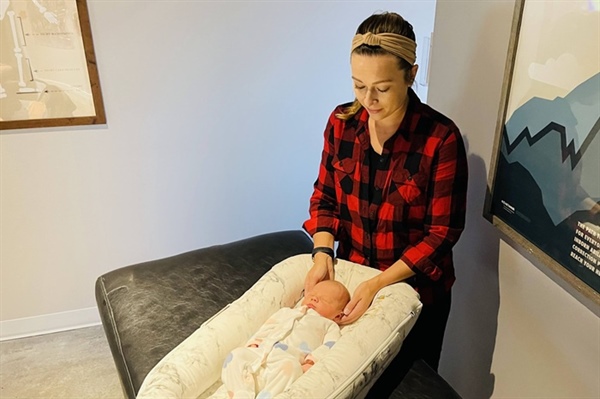
Pediatric Chiropractors use precise, light fingertip pressure to mobilize the TMJ and relax the surrounding chewing muscles. The pressure amount is no more than you’d use to check the ripeness of a tomato. Releasing this tension allows the baby to open wider and establish a deeper, more comfortable seal.
Restore Neck Range of Motion
A baby needs to comfortably rotate their head and slightly extend their neck backward to clear their nose and properly face the breast.
Misalignments in the upper cervical spine (particularly in C1 area), which are often associated with infant torticollis, can make turning the head to one side highly uncomfortable. These babies often pull off the breast, fuss aggressively when held in a specific cradle hold, or completely refuse one side.
Gentle pediatric adjustments remove structural restrictions in the upper neck. Restoring a full, symmetrical range of motion ensures the baby can easily turn and position themselves at both breasts without pain.
Support Oral Mechanics and Tissue Function
Even when structural restrictions are cleared, oral anatomy can present a barrier if the infant as a tongue-tie or lip-tie (tethered oral tissues).
Tight frenulums restrict the tongue’s ability to elevate and extend, which is vital for creating the vacuum suction needed to draw milk.
While chiropractors do not surgically clip ties, they perform intra-oral soft tissue therapy to stretch tight tissues and relax compensatory muscle guarding in the floor of the mouth. This can improve overall tongue mobility.
Help Your Infant Stay Comfortable with Pediatric Chiropractic Care
Restore Chiropractic is proud to offer pediatric chiropractic services to our youngest and smallest patients. Using specific techniques and light pressure, we can help your infant feed better and thrive. Our holistic approach is perfect for the parents who don’t want to use medications or other harsh treatments.
Next Steps: